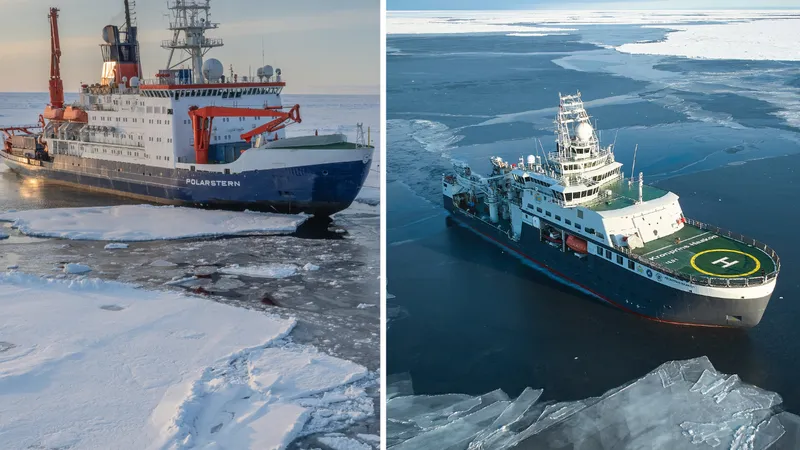
The i2B cruise KH3013 departs Longyearbyen in the search for the Miocene
Monday, September 14th, 2026
On September 13th, 2026, the research vessel R/V Kronprins Haakon departed from Longyearbyen, heading deep into the Central Arctic Ocean. This expedition, part of the i2B project, is on a mission to uncover the Arctic’s climate history during some of Earth’s warmest periods.
This cruise is focused on retrieving sediment cores from the Lomonosov Ridge, a unique geological feature where ancient sediments from the Miocene and Pliocene periods are exposed on the seafloor. These sediments are like time capsules, holding valuable clues about how the Arctic responded to warmer-than-present conditions.
“We are targeting sediments from the Pliocene (ca. 3 million years ago) and Miocene (ca. 15 million years ago), and potentially even the Oligocene (ca. 30 million years ago),” explains Dr. Jochen Knies (UiT The Arctic University of Norway), one of the cruise leaders. “These were periods when the Arctic Ocean looked very different from today, but we still know surprisingly little about just how different it was.”
With atmospheric CO₂ levels similar to or even higher than today’s, the team is asking big questions:
- Was the Arctic Ocean once truly “blue,” with little or no summer sea ice?
- Were ocean temperatures significantly warmer?
- What kind of ecosystems and biodiversity thrived in this ancient Arctic?
The answers to these questions will not only help us understand the Arctic’s past but also provide critical insights into its future as the planet continues to warm.
Want to follow along? We’ll be sharing updates, stories, and glimpses of daily life aboard the ship on our social media channels, cruise blog, and right here on the project website. Stay tuned for more!